
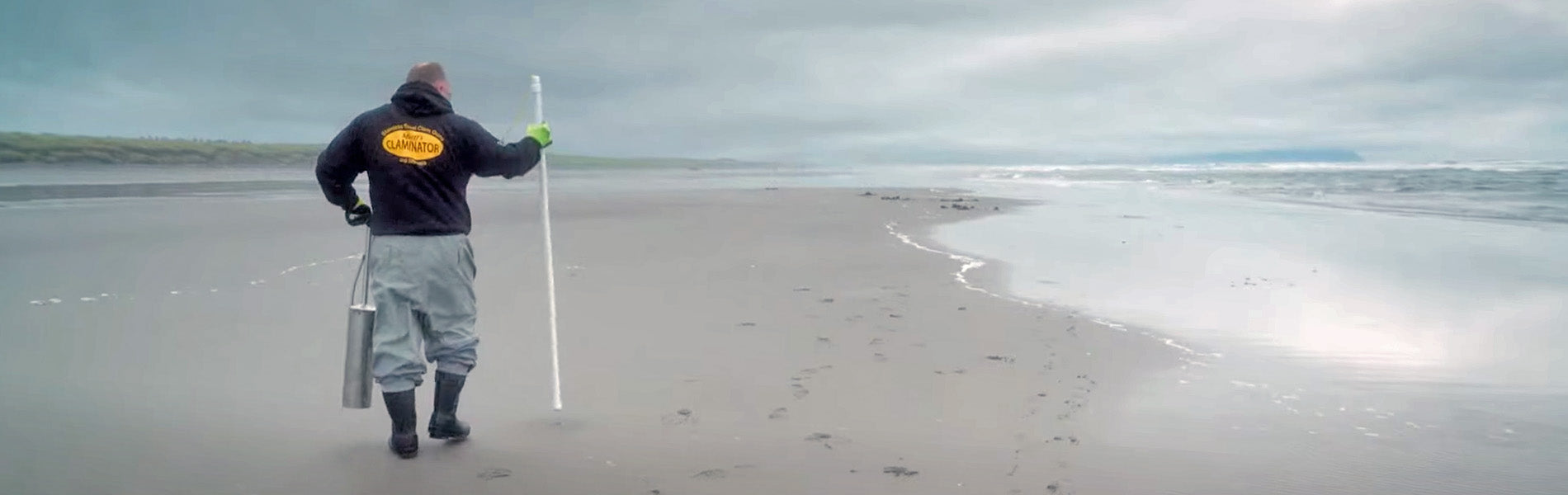
How to Build Your Own Tamper
Sometimes "pounding" or "tamping" is the most effective way to produce clam shows. Tamping or stomping on the sand can disturb a razor clam and cause it to begin digging down deeper into the sand for safety. As it retreats it will often create a small hole or a "show" on the surface of the sand. Depending on the conditions, a tamper can be essential equipment to find your clams.
I use a “grid” approach in the dry sand most frequently, tamping firmly for 15-30 feet, turn around and come back beside your first line, repeat with a third and 4th pass. Sometimes it takes a few minutes for shows to develop so scan the area you pounded – dig any shows that appear, expand your grid in neighboring (undisturbed) sand.
Tamping in a grid keeps you in an area while waiting for shows to develop, I see people tamping in a wandering line and never back tracking to look for results. I have dug many clams by going over someone’s tamped area they did not stay around long enough to find the results.
You can pound in the surf, but I suggest waiting until the sand settles and you can see the bottom clearly. This method requires a little more awareness and good eyesight. As always, be aware of the surf and don’t turn you back on the ocean, exercise safety. Some people stamp their feet to get the clams to show, in the same grid application.
Also, be aware of the indentation your pounder makes in the sand, and don't confuse it with an actual clam show! (not that I've ever done that.😊)

Supplies Needed:
- 1” schedule 40 pvc pipe approx. 48” long
- 1” PVC slip on cap
- Slip on 1” x ¾" male threaded pvc adaptor
- ¾” threaded cap
- Approx. 4 ft, 5/16” nylon rope
- Carabiner
- 2 stainless steel hog rings to secure loop on carabiner end of rope (optional)
- Approx. 1-1/2 – 2 lbs. sand for ballast.
- Silicone sealant
Instructions:
- Use PVC glue to attach slip on cap to bottom of pipe
- Glue adaptor onto top of tube
- Drill top of threaded cap to size of rope, thread rope through and double or triple knot on inside of cap. Silicone sealant around knot
- Fill with sand (I use about 2/3rds of red solo cup, for weight)
- Screw with glue the cap w/rope, onto adaptor
- Make loop on long loose side of lanyard / rope and secure with hog rings or other suitable method
- Silicone sealant around top of cap / rope to keep water from entering tube
- Attach carabiner to loop for clipping onto belt loop or waders, allowing you to drop the pounder so you can focus on digging your prize